10% OFF + 2 FREE Classic Latex Pillows | Back Care Awareness Week
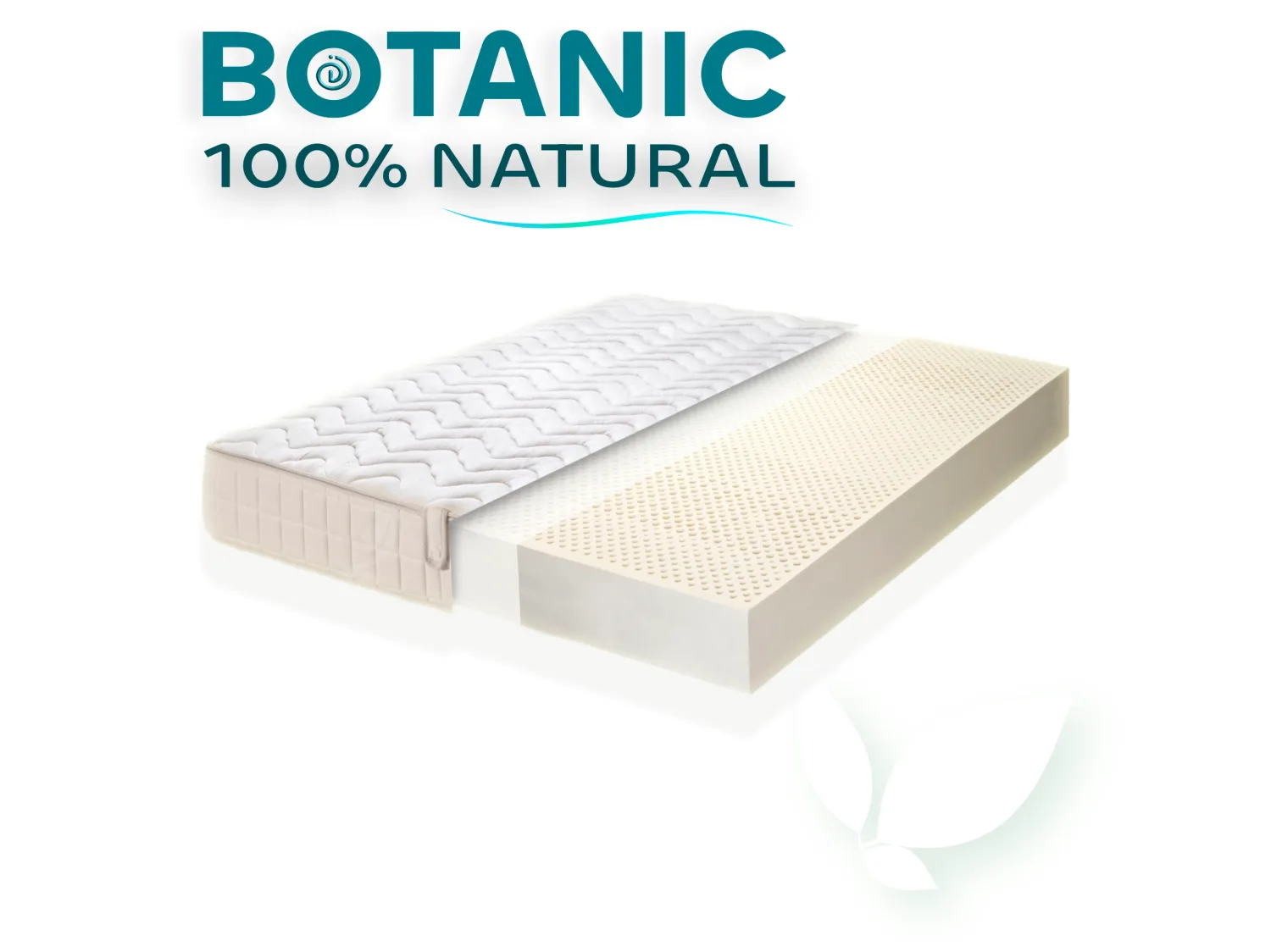
BOTANIC- 100% Organic Latex Mattress -Dunlop Technology
£0
PREMIUM
Price incl. Taxes (20%) £0
Classical Conception 100% Organic Latex Mattress with 7 zones ANATOMICAL-ORTHOPAEDIC comfor
SIZE
Please choose
Select Mattress Depth
Please choose
FIRMNESS BY BODY WEIGHT
Please choose
COVERS
Please choose
In stock
1
Delivery date: today
You will receive an email with the product attachment today, immediately after the payment is completed.
BOTANIC- 100% Organic Latex Mattress -Dunlop Technology
Product Details
100% Organic · Dunlop Technology · 20 Days Delivery
Botanic
Organic Latex
Mattress
100% organic Original Dunlop latex mattress built for the precise balance between anatomical adaptation and orthopaedic support. Firmness is regulated by your individual body weight — one correct level, chosen by you alone. Every mattress is made to your confirmed specification — not supplied from stock.
Each person selects by their own body weight — not by combined weight. Not sure between two firmness levels? Botanic Dual Plush may be the better direction.
Botanic Premium Main Video
×
Your Configuration at a Glance
Material
100% Organic Dunlop Latex
Heights
20 / 24 / 26 cm
Firmness — by body weight
Soft Medium Firm Extra Firm
One firmness per person — use your individual weight only
Cover Options
Cotton Cotton & Wool Aloe Vera Cashmere
Support Zones
7-Zone Anatomical Map
Delivery
20 Days · Custom Made to Order
01 — Firmness
Choose Your Latex Mattress Firmness By Body Weight
Firmness is regulated by your individual body weight — not by guesswork or personal preference. This creates the correct balance between anatomical adaptation and orthopaedic support for your specific body.
Firmness is not a preference label. It is a body regulation system. The correct firmness for your body protects support, adaptation and long-term comfort. Choosing softer than your body requires is usually the bigger mistake — not the safer one.
+ Why Correct Firmness Feels Better Than “Softer”
Firmness in a natural Dunlop latex mattress is a regulation system based on your individual body weight and body proportions. When the correct density is matched to your weight, the mattress provides the precise balance between anatomical adaptation and orthopaedic support. This is engineering, not opinion.
Softer is not automatically more comfortable. A mattress that is too soft for your body weight allows the pelvis and lumbar region to sink, which breaks spinal alignment and creates tension across the back, shoulders and hips over time. The sensation of softness at first contact does not mean the body is being supported correctly during 7–8 hours of sleep.
Firmness works like clothing size. The right size feels natural because it fits you. A size that is too small or too large may still be wearable, but it will never support you correctly.
Medium, Firm or Extra Firm can still feel adaptive and comfortable when correctly selected. The latex adapts instantly to body contours regardless of firmness level. What changes is the structural density that holds the body above the surface — not the softness of the contact layer.
Use the firmness cards below. Find your body weight. That is your correct firmness.
Soft
0 – 48 kg
up to 7.5 st
Maximum adaptation for lighter bodies. The foam responds with greater surface contouring to distribute a lighter load correctly.
Medium
49 – 87 kg
7.7 – 13.7 st
Balanced support and adaptation for the widest range of body types and sleep positions.
Firm
88 – 114 kg
13.9 – 18 st
Stable support for higher body weight. Higher density keeps the body above the surface and the spine correctly aligned.
Extra Firm
115+ kg
18+ st
Reinforced support for heavier body weight. Structural integrity maintained to preserve anatomical balance at higher load.
✓
I know my weight and want one clear firmness
Botanic is the correct choice. Select your firmness above.
?
I am unsure between two firmness levels
Consider Botanic Dual Plush — designed for this situation.
+ How firmness regulation works — and why it removes the guesswork
Firmness in a natural latex mattress is not a personal preference. It is a regulation. The Dunlop process allows us to produce latex foam at precisely calibrated density levels. The correct density for your body is determined by your body weight.
When you follow the weight guideline, you are not guessing. You are applying an engineering regulation that produces the correct balance between anatomical adaptation and orthopaedic support for your specific body load.
Use Your Individual Body Weight Only
When we say Medium from 49 kg to 87 kg, we mean the body weight of the individual person — not the combined weight of two people. If your weight is 78 kg and your partner's weight is 65 kg, both of you are in the Medium range. You do not add both weights together. Each person is considered individually, because every body has its own need for adaptation and support.
Why Body Weight — Not Personal Preference?
Personal comfort preference is real — but it is a result of correct support, not a starting point. When the firmness is correctly calibrated for your body weight, you receive both support and adaptation simultaneously. That is what creates genuine comfort. When it is wrong, the mattress either sinks too much or feels unnecessarily firm — regardless of what you think you prefer.
+ Who Is This Mattress For?
Botanic is designed for customers with a solid and clear comfort requirement. It is the classic choice for people looking for a natural Dunlop latex mattress with Dunlop technology.
This model is for customers who already know they want one exact firmness, without mixing two different comfort levels.
Botanic is a beautiful choice for people looking for one specific and stable firmness: Soft, Medium, Firm or Extra Firm.
Who Is It Not For?
Botanic is not the best choice for customers who are unsure between two firmness levels. For example, if you are not sure whether Firm or Medium is the better choice, then this is not the right model for you.
In that case, the better direction is Botanic Dual Plush or Bio Comfort Dual Plush.
Botanic = one clear firmness. Dual Plush = a regulated mix of two firmness levels.
02 — Comfort
What Comfort Should You Expect From This Latex Mattress?
It is important to know this: this mattress and the latex foam will always keep you on the surface of the mattress. No matter which firmness you use, the overall behaviour of latex foam is focused on one thing — providing the exact balance between support and adaptation.
That is why we keep repeating these words: balance between adaptation and support. You receive the right dose of adaptation that makes you feel comfortable, while also receiving the anatomical and orthopaedic support needed to keep you above the surface without sinking.
At the same time, you still feel lightness, comfort and softness. This is the quality of natural latex foam — a natural material used with engineering precision.
+ Learn More About Support, Adaptation And Latex Behaviour
The Balance Between Support And Adaptation
Support is the reliable bearing force that holds the body and keeps it above the mattress surface. Adaptation is the fine tuning regulated according to your body weight and proportions. This is why the firmness regulation system is based on body weight — it ensures that both forces are correctly calibrated for your specific load.
Individual Weight — Always
When we say Medium from 49 kg to 87 kg, we mean the body weight of the individual person, not the combined weight of two people. If your weight is 78 kg and your partner's weight is 65 kg, both of you are in the Medium range. You do not add both weights together.
The Magic Of Density
Latex foam has a density almost twice as high as standard polyurethane foam, conventional foam, visco foam or memory foam. Because of this, the body remains above the surface and receives the right dose of structural support for the skeletal system and spine.
The Magic Of Elasticity
When you lie down, your weight becomes distributed across the surface. Your body does not sink as it would in memory foam and it does not wrap around you unnecessarily. You stay on the surface — but because of high elasticity you still receive full adaptation. Your shoulders settle only as much as needed. Your pelvis stays lifted. Your lower back receives the support it requires.
Instant Adaptation
The adaptive response is instant. There is no waiting to sink down before some memory effect starts. Every position change, every micro-movement during sleep, is absorbed and responded to in real time.
A Gift From Nature, Processed With Dunlop Technology
Nature gave us this exceptional material — the milk of the rubber tree. Dunlop technology turns it into foam and allows us to regulate it through clear anatomical and orthopaedic rules. The result is a material that is simultaneously supportive, adaptive, breathable and bio-based.
03 — Height
Choose Your Natural Latex Mattress Height
Three heights are available. All three deliver the same core support and adaptation principles. The difference is comfort depth, material volume and adaptation depth. Choose based on your budget preference and desired comfort profile.
20
cm · 8 inches
Balanced Comfort
Full support and adaptation in a refined profile. The complete Botanic system at a lower entry point.
24
cm · 9.5 inches
Deep Comfort
More latex material, deeper adaptation response. A more substantial feel with greater surface engagement.
26
cm · 10.25 inches
Premium Depth
Maximum latex depth. The fullest expression of the material's adaptive and structural capacity.
+ Why height affects the comfort experience
Height directly affects how much latex material is present. The more material there is, the more the foam can express its adaptive and structural capacity. A deeper mattress has more volume to distribute body load, more material to respond to body contours, and a more substantial presence.
All three heights use the same Dunlop latex core and the same firmness calibration. The height choice is about depth of material and budget range — not a fundamental difference in support quality.
+ All standard sizes — for reference only
Select your size from the dropdown menu above — this list is for reference only.
Small Single
75 × 190 cm
Long Small Single
75 × 200 cm
EU Small Single
80 × 200 cm
Single
90 × 190 cm
Euro Single
90 × 200 cm
Large Single
100 × 200 cm
Small Double
120 × 190 cm
Euro Small Double
120 × 200 cm
Double
135 × 190 cm
Compact Double
140 × 190 cm
Euro Double
140 × 200 cm
King
150 × 200 cm
King Long
150 × 210 cm
Euro King
160 × 200 cm
Euro King Long
160 × 210 cm
Euro King XL
160 × 220 cm
Super King
180 × 200 cm
Super King Long
180 × 210 cm
Super King XL
180 × 220 cm
Emperor
200 × 200 cm
Emperor Long
200 × 210 cm
Emperor XL
200 × 220 cm
04 — Covers
Premium Latex Mattress Cover Options
All covers add approximately 2 cm to the total mattress height (1 cm top + 1 cm bottom). Every cover is zip-off, washable at 40°C and includes cotton wadding inside.


100% Organic Cotton Best natural ventilation.
Cotton & Wool Double-sided cover · Best insulation.
Aloe Vera + Cotton More elasticity.
Cashmere + Silver Ions Elasticity + softness.
Organic Cotton Maximum Breathability
The purest airflow option. Organic cotton is the most breathable natural fibre — ideal for warmer sleepers or warmer climates. Natural, washable, clean. Maximum air circulation at the sleep surface at all times.
Double-Sided Cotton / Wool Summer and Winter Versatility
Cotton side for summer — maximum airflow. Wool side for winter — the best natural thermal regulator available. Wool also functions as a natural fire barrier, meeting UK and EU hospitality standards without chemical flame retardants.
Aloe Vera Blend Elastic, Antibacterial and Plush
Elastic and plush to the touch. Naturally antibacterial. Particularly suited for hotel environments and asthma-sensitive sleepers. The Aloe Vera treatment is integrated into the fibre structure — not a surface coating.
Cashmere + Silver Ions Nano-Silver, Anti-static and Refined
Nano-silver ions provide antibacterial and anti-static protection. Cashmere adds a refined, soft handfeel at the contact layer. The highest material quality option for those who prioritise surface feel and hygiene protection simultaneously.
+ Why the cover is part of the sleep system, not an accessory
Fire Safety Without Chemicals
Wool and graphite fibres woven into the cover materials serve as natural fire barriers, meeting UK and EU hospitality fire safety standards without aggressive chemical finishes. Fire safety is built into the material structure itself.
Zip-Off Design
All covers are zip-off for easy removal and washing. This allows you to maintain hygiene consistently over the lifetime of the mattress. Choose your microclimate: maximum airflow with cotton, balanced thermal regulation with wool, antibacterial surface with Aloe Vera, or refined protection with Cashmere and Silver Ions.
Cover Customisation
The cover is the final layer of your sleep configuration. We offer four material options so you can tailor the mattress to your health needs, climate and comfort preference.
Height added
+2 cm total (1 cm top + 1 cm bottom)
Washing
40°C — zip-off on all covers
Inner wadding
Cotton wadding, included in all covers
Fire compliance
UK and EU hospitality standards — natural fibre construction
05 — Benefits of Organic Latex
Why Organic Natural Latex Is Different
A natural latex mattress made with Dunlop technology is not comparable to memory foam, HR foam or standard PU foam. It is a different category of material — with distinct engineering, breathability, durability and health advantages that do not exist in petroleum-based foams.
Different From Memory Foam
Does not trap heat, does not create a sinking sensation, responds instantly without warming up or slow recovery.
Different From Springs
No noise, no vibration, no long-term coil fatigue. A continuous, silent and even support surface across the entire mattress.
Certified Health Assurance
OEKO-TEX Standard 100 covers both the latex foam core and the textile materials — confirming the absence of toxins and allergens.
Bio-Based Natural Material
Tapped from the Hevea brasiliensis tree. Renewable, biodegradable, and genuinely environmentally sound — not a marketing claim.
Long-Term Durability
Retains density and elasticity for decades. 15-year warranty. Real-world lifespan of 20–25 years without sagging or softening.
Instant Adaptation
No delay. No warming-up period. The latex responds to every position change in real time throughout the night — no lag, no memory effect.
Origin
Natural Latex Origin
Small visual proof of the material journey from latex milk to foam.
+ Why natural latex is structurally superior to petroleum foams
Petroleum Foams Explained
Memory foam, HR foam and standard PU foam are derived from refined petroleum. They can off-gas volatile organic compounds and often require a trade-off: either a sinking softness with poor support, or a uniform firmness with poor adaptation. Neither outcome is anatomically ideal for healthy sleep.
Latex Is Bio-Based
Natural Dunlop latex is tapped from the rubber tree — a renewable botanical source. The material is biodegradable and carries real environmental value that is traceable from plantation to finished product.
Breathability Advantage
The open-cell matrix of latex foam, combined with engineered ventilation channels, allows far greater airflow than memory or PU foams. This keeps the sleep surface drier, fresher and less prone to heat build-up. This is a structural advantage, not a surface treatment.
Why Latex Costs More
Latex foam production is technically complex and more expensive than petroleum foam manufacturing. This cost is reflected in material quality, longevity and performance. An organic latex mattress is a long-term investment in sleep quality.
06 — Support
Orthopaedic Support From Natural Latex
Support means bearing force — the capacity of the mattress to hold the body above the surface and maintain the spine in its natural position. In natural latex, high density provides this support without creating a hard or rigid surface.
Body stays above the surface
High density prevents sinking. The body rests on the surface rather than into it, keeping the spine naturally aligned throughout the night.
Skeletal alignment
Consistent, calibrated bearing force across the entire sleep surface ensures the skeletal system and spine receive stable structural support.
No long-term deformation
Latex density resists compression and structural breakdown for decades — unlike memory foam or spring systems that lose shape over time.
Density without hardness
High density and surface comfort are not opposites in natural latex. High density keeps you supported while elasticity keeps the surface comfortable and adaptive.
+ How support and adaptation create each other — not compete
Most mattress materials force a compromise: either soft comfort at the expense of structural support, or firm support at the expense of surface comfort. Natural Dunlop latex refuses this compromise.
The high density provides the structural bearing capacity — the body stays on the surface, not in it. The high elasticity provides the adaptation — the material responds to the shape and weight of each body area in real time.
These two properties amplify each other. Without density, elasticity would produce an unsupported sink. Without elasticity, density would produce a hard, uncomfortable surface. Together, they create the balance that defines anatomical and orthopaedic sleep performance.
2×
Denser than memory or PU foams
20–25y
Real-world structural lifespan
07 — Adaptation
Anatomical Adaptation And Instant Latex Response
Adaptation is the fine tuning of the mattress surface in response to your body weight and body proportions. In a natural latex mattress, this response is instant, precise and consistent throughout the night — with no delay and no recovery lag.
Instant response
No delay, no warming-up period. The latex responds the moment the body makes contact with the surface.
Body load distribution
Body weight is distributed across the entire sleep surface rather than concentrated in pressure points — reducing stress on joints and soft tissue.
Shoulder response
The shoulders settle only as much as needed to absorb their load correctly. Lateral pressure is released without losing spinal alignment.
Pelvis and lumbar response
The pelvis stays lifted and the lumbar region receives calibrated support — maintaining spinal neutrality without muscular effort during sleep.
Elasticity
Elasticity / Adjustable Bed
Compact visual proof of latex movement and instant adaptive response.
+ What anatomical adaptation actually feels like
At first glance, a natural latex mattress may appear soft. But when you lie down, something different happens. Your weight becomes distributed across the surface in a way that is very unlike what happens with memory foam or springs.
Your body does not sink. It rests on the surface. Because of the high elasticity, every contour of your body receives a precise adaptive response — but you do not go into the material. You stay above it while the surface moulds to your shape.
The shoulders compress only as far as needed. The pelvis stays lifted. The lower back is supported without pressure. The result is a feeling of lightness above the surface — simultaneously supported, comfortable and free from localised pressure.
Movement during sleep is absorbed in real time. There is no resistance, no slow recovery, no feeling of being held in place. The latex responds and resets — continuously, throughout the night.
08 — 7-Zone Support
Advanced 7-Zone Latex Mattress Support
One core. Seven calibrated responses. The perforation pattern changes how each body area is supported — without breaking the uniform comfort of natural latex across the whole surface.
Z1
Head & Neck
5–6 kg calibration
Z2
Shoulders
Softer perforation
Z3
Lumbar
Lower-back bridge
Z4
Pelvis
Reinforced zone
Z5
Thighs
Load transfer
Z6
Calves
Venous comfort
Z7
Feet & Ankles
Soft landing
7 Zones
7-Zone Spinal Alignment
Small visual proof of anatomical zoning and spinal balance.
+ How each zone works — and what it gives you
Perforation adjusts local density and airflow across the foam core. Each zone has a different perforation pattern — but the firmness of the latex itself remains consistent. The result is one material with seven distinct calibrated responses.
Zone by Zone
Head & Neck (Z1) — Calibrated for a head load of approximately 5–6 kg. Works with the pillow to create a complete and aligned sleep position.
Shoulders (Z2) — Softer perforation allows the shoulder to settle when side-sleeping. Lateral pressure is released and the spine stays level.
Lumbar (Z3) — Bridges the lower-back gap. Relaxes the paraspinal muscles and supports the natural lumbar curve without strain.
Pelvis (Z4) — The pelvis is the heaviest part of the body. This zone is reinforced to prevent sinking and to hold spinal neutrality through the night.
Thighs (Z5) — Smooth load transfer between pelvis and knees. Stabilises posture and reduces pressure in this transition area.
Calves (Z6) — Softer response to avoid venous compression where blood flow is highest. Contributes to lighter legs and easier sleep onset.
Feet & Ankles (Z7) — Soft landing with fewer pressure spikes. Reduces micro-movements before and during sleep.
Additional Effects
The vertical and horizontal channels within the foam core improve airflow across all seven zones simultaneously. The zone calibration also creates a gentle, passive spinal decompression effect over 7–8 hours — a structural consequence of maintaining correct anatomical alignment throughout sleep, and a gentle stretching effect on the spine.
09 — Ventilation
Breathable Latex Mattress For Temperature Comfort
The open-cell structure of natural latex foam, combined with vertical and horizontal ventilation channels, creates a breathable latex mattress that maintains a drier and fresher sleep microclimate. No trapped heat. No moisture build-up.
Warm in winter — cool in summer
Passive temperature regulation through continuous airflow in the open-cell foam structure throughout the night.
No heat retention
Unlike memory foam, natural latex does not trap body heat at the sleep surface. Heat dissipates naturally through the open-cell matrix.
No moisture or mould
Continuous airflow keeps the microclimate dry — removing the conditions that allow mould, bacteria and mites to develop over time.
4–5× better than memory foam
A structural difference in material design — not a surface treatment or a marketing claim. Measurable and consistent throughout the product lifespan.
Airflow
Airflow / Ventilation Channels
Compact visual proof of breathable channels and airflow movement.
+ Why ventilation matters for sleep quality
Before sleep begins, the brain initiates a reduction in core body temperature of approximately 1–1.5°C. If this cooling process is disrupted by a warm or moisture-retaining sleep surface, the onset of sleep is delayed and sleep quality is reduced.
The breathable structure of a natural latex mattress supports this natural cooling process by keeping the sleep surface drier and more thermally stable — not by generating cold, but by preventing heat build-up at the surface.
A Note On Claims
A mattress is not a climate control system. It reflects the temperature of the room it is in. What ventilation genuinely achieves is the prevention of trapped heat and moisture at the sleep surface — a real and measurable improvement in sleep microclimate quality.
Relative ventilation performance
Natural Latex
100%
HR Foam
~65%
Memory Foam
~22%
Standard PU
~12%
10 — Hygiene
Hypoallergenic Latex Mattress For Cleaner Sleep
A hypoallergenic natural latex mattress creates a cleaner sleep environment through airflow and dryness — not through chemical treatments. Naturally anti-mite, anti-mould and antibacterial by material structure.
Naturally antibacterial
The open-cell structure and continuous airflow inhibit bacterial growth by keeping the sleep surface dry and well-ventilated.
Significant mite reduction
A latex mattress harbours significantly fewer mites than spring or PU alternatives — driven by airflow and dryness, not chemical treatment.
Anti-dust airflow
Ventilation channels move dust out of the sleep surface rather than allowing it to settle — directly beneficial for asthma-sensitive environments.
Asthma-supportive environment
A drier, cleaner and better ventilated sleep surface — consistent with the environment that respiratory health professionals often recommend.
+ Understanding the health benefits of a natural latex mattress
A Realistic Picture
No mattress completely eliminates mites or bacteria. The meaningful comparison is relative: spring and PU mattresses can harbour approximately 1.5 million dust mites after three years of use. A natural latex mattress — maintained under normal conditions — typically harbours around 0.5 million. This is a significant reduction, driven by the structural advantage of airflow and a drier microclimate.
The Logic
Ventilation → drier microclimate → fewer mites and bacteria → less airborne dust → a cleaner sleep environment. This is not a health claim — it is the structural consequence of how natural latex foam is made and how it breathes.
~1.5M
Mites in spring/PU after 3 years
~0.5M
Mites in natural latex after 3 years
11 — Certifications & Manufacturing
Certified Natural Latex Foam And European Production
Every Botanic mattress is produced in Europe under German oversight with Siemens process monitoring and full traceability — from raw latex sourcing through foam production to final packaging.
OEKO-TEX® Standard 100
Foam Core and Textile
Covers both the natural latex foam core and the textile cover materials. Confirms the absence of harmful substances across the complete product. Recognised European safety reference. Safe for all ages including babies.
ECO-Institut
German Laboratory
Independent German testing laboratory. Validates low VOC emissions and material purity with objective, third-party measurement and reporting.
Hohenstein
Independent Control
Independent supply chain certifier and quality control partner. Provides third-party oversight of production standards and material quality across the production chain.
Siemens Monitoring
Process Control
Production stages monitored from foam processing to cutting, zone perforation, quality inspection and final packaging. End-to-end traceability is built into every stage of the manufacturing process.
ISO 9001 · 14001 · OHSAS
Quality · Environment · Safety
International management standards for quality control, environmental responsibility and occupational health and safety — maintained across the production facility and process.
Durability
Durability Pressure Test
Small visual proof of resilience, pressure response and long-term material stability.
+ What these certifications mean — and where this mattress is actually made
Why OEKO-TEX® Matters More Than Decorative Eco Claims
OEKO-TEX® Standard 100 is one of the most important European safety references for this product because it applies not only to fabrics and covers, but also to the latex foam itself. For a mattress, this matters more than decorative eco labels, because the foam core is the main material in direct long-term contact with the body.
OEKO-TEX® is a recognised and rigorous European testing and certification framework — established, independently verified and directly aligned with our European production context. It tests both the latex foam core and the textile cover materials, confirming the absence of harmful substances across the complete product.
German Standards and Process Oversight
A significant part of this production process is carried out in Germany, with European production control and strict monitoring from raw material processing to final inspection. This is not a simple assembly operation. It is controlled latex foam manufacturing and finishing within a certified European production framework — with Siemens monitoring, ECO-Institut testing and Hohenstein certification as part of a German-centred quality structure.
Raw Material Origin
Natural latex is sourced from Hevea brasiliensis plantations in Indonesia — the primary global growing region for natural rubber. All processing, foam production, zone calibration and quality control take place in Europe, under German oversight, with nothing outsourced.
A Factual Note on Latex Foam Production
It is important to distinguish between latex foam production and mattress assembly. Latex foam production is a specialised industrial process that requires dedicated foaming equipment and controlled manufacturing conditions. In the UK market, many products described as "made in the UK" are actually assembled, covered or combined with imported latex foam layers. This is not the same as producing natural latex foam. Botanic is based on certified European latex foam production — not a thin latex layer added to a hybrid construction or an assembly of imported components.
Raw material origin
Hevea brasiliensis — Indonesia
Processing location
Europe — under German oversight and standards
Process monitoring
Siemens tracking — foam processing, cutting, zoning, inspection, packaging
Certifying bodies
OEKO-TEX · ECO-Institut · Hohenstein · ISO · GRS
12 — Warranty & Durability
Structural Warranty
15
Year Warranty
Real-world lifespan 20–25 years. Natural latex retains density and elasticity across decades — engineered durability, not a marketing claim.
Warranty details
The warranty covers structural indentations deeper than 2 cm — equivalent to more than 12% of the total mattress height. Smaller surface impressions are normal signs of the material conforming to body load and are not covered as defects.
Rotate the mattress three times in the first six months of use for even stabilisation of the latex foam. Natural latex does not sag or soften the way memory foam or spring systems do. Its structural integrity is maintained by the density and elasticity of the material itself.
2×
The Pillows Are on Us
Every Botanic mattress comes with 2 classic natural latex pillows (60×40×14 cm) included as a gift. You buy the mattress — the pillows arrive with it.
13 — Delivery
Made To Order Latex Mattress — Prepared to Your Specification
Every Botanic mattress is prepared to order on the basis of your confirmed configuration. Size, height, firmness and cover selection are confirmed before production begins. This is not generic warehouse stock.
+ Production and delivery note
Because each mattress is built individually to your confirmed configuration — including size, height, firmness level and cover material — production timing and delivery coordination begin after your order is confirmed. This ensures that what you receive is built specifically for you, not taken from a generic inventory.
We will confirm the expected production and delivery timeline directly following order placement. Delivery is coordinated in line with the completed build.
Engineered For
Deep, Natural Sleep.
A custom-made organic latex mattress built around your body, your firmness regulation and your natural sleep comfort.
You May Also Like
BIO SUPPORT 100% Organic Latex Topper Dunlop Technology
£0
BIO SUPPORT 100% Organic Latex Topper Dunlop Technology
100% Natural Latex Topper - Different Firmnesses -Thickness Variations Hi- quality latex topper
Best Price
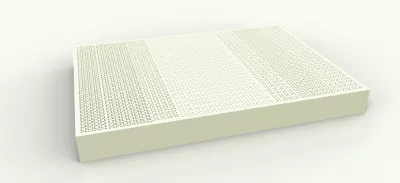
AMBIENT- Optimised Value 100% Natural Dunlop latex mattress
£0
AMBIENT- Optimised Value 100% Natural Dunlop latex mattress
Best Price for 100% Natural Latex ANATOMICAL-ORTHOPAEDIC comfort
Orthopaedic
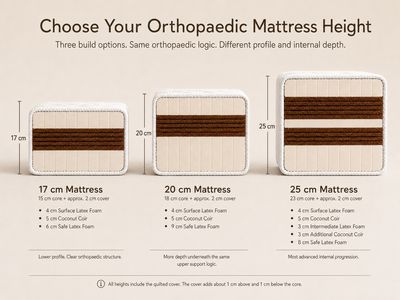
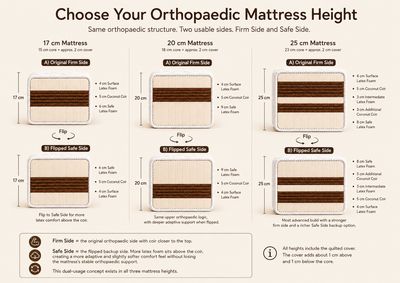
ORTHOPAEDIC Coconut Coirs + 100% Organic Latex Dunlop Technology
£0
ORTHOPAEDIC Coconut Coirs + 100% Organic Latex Dunlop Technology
100% Organic Latex Foam combined with Coconut Cour layers. ORTHOPAEDIC comfort
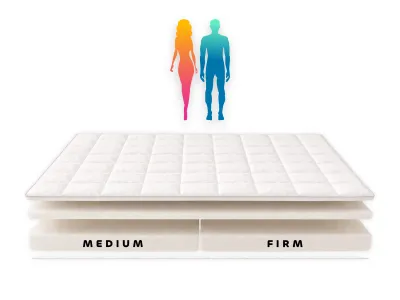
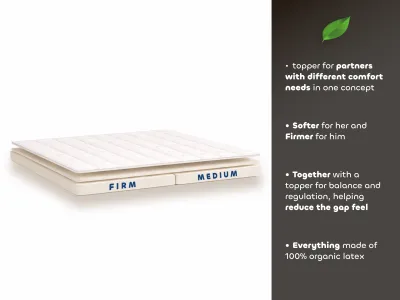
Latex Topper for Partners - FIRM & MEDIUM 100% Natural Rubber Foam
£0
Latex Topper for Partners - FIRM & MEDIUM 100% Natural Rubber Foam
Split Firmness Latex Topper – MEDIUM / FIRM
Best Price
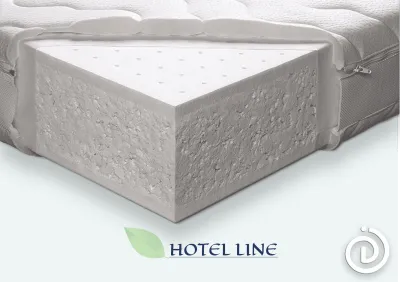
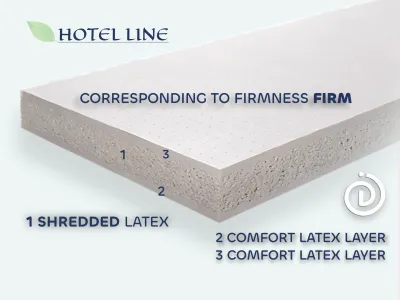
HOTEL LINE Optimised Value 100% Dunlop latex mattress
was £1
Save 10%
£0.90
HOTEL LINE Optimised Value 100% Dunlop latex mattress
100% Latex mattress ( Base from Shredded Latex ) for your Hotel , Guest House or Villa
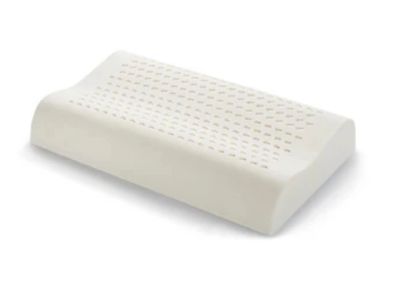

Pillow BIO Anatomic 60x40x12-10 cm. / 23.6” × 15.7” × 4.7”/3.9”
£80
Pillow BIO Anatomic 60x40x12-10 cm. / 23.6” × 15.7” × 4.7”/3.9”
Wave Shape 100% Natural Latex pillow
Display prices in:GBP